450M+ Real-Time Signals: How Verified Data Powers Smarter Targeting
admin
April 3, 2019
How massive signal pools refine user intent and fuel higher-performing campaigns Digital advertising isn’t about having the most data. It’s about having the cleanest, most reliable, and valid signals.
This change is significant, even if it seems small at first. As privacy rules become stricter and third-party cookies are phased out, brands are focusing less on quantity and more on accuracy.
Pixel Pluses uses over 450 million real-time data signals to power contextual and location-based targeting with precision. These signals clarify audience intent, reduce wasted spending, and change how brands find valuable customers. This article explains why these signal pools are important, how they work, and what they offer marketers seeking more reliable, efficient results.
Why Data Signals Matter More Than Ever in 2025
Let’s be honest: for years, “data-driven marketing” was thrown around loosely. Everyone claimed to be data-first. Everyone claimed they had “the best targeting.”
But today, the landscape is different.
Privacy regulations have restricted passive tracking.
Big platforms have walled off their ecosystems.
Cross-app tracking is more limited.
Third-party cookies are disappearing.
Now, marketers can’t depend on broad audience groups. To stay competitive, they need verified, multi-layered, and consent-based signal pools. These are data sources that are checked, cross-referenced, and turned into something truly useful for predictions.
Put simply, it’s no longer about guessing who your audience is. It’s about knowing exactly who they are, what they want, and when they’re most likely to take action.
This is where over 450 million verified data signals make a real difference.
What Exactly Is a Data Signal?
When people interact online by scrolling, tapping, searching, watching, and purchasing, these micro-actions generate data signals. Each signal helps reveal:
Intent (What they’re trying to do)
Interest (What captures their attention)
Context (Where they are in their journey)
Behavior (How they typically respond)
On their own, these signals may seem small. But when combined, like the 450M+ real-time signals leveraged by Pixel Pluses, they create a high-resolution view of audience motivation.
This enables marketers to move beyond assumptions, delivering campaigns based on real-time behavior, clear intent, and contextual relevance.
How 450M+ Verified Signals Are Collected (Privacy-first, not creepy)
The keyword is verified.
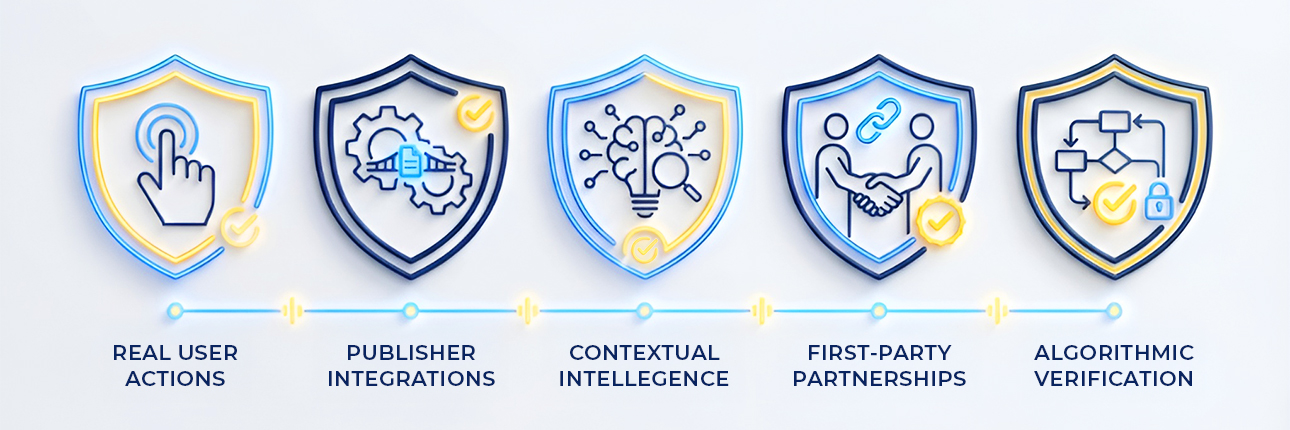
This isn’t about using random scraped data or unclear lookalike audiences. Verified signals come from:
1. Real user actions
Clicks, views, scroll depth, session patterns, time spent, and engaged sessions are all directly linked to real user behavior.
2. Publisher integrations
Premium publishers send real-time signals from high-quality content environments, enabling a richer understanding of users than generic ad networks.
3. Contextual intelligence
Signals track content type, themes, sentiment, time-of-day patterns, and device type, all while protecting user privacy.
4. First-party partnerships
Retail, finance, lifestyle, travel, and other data partners feed in verified audience attributes with clear consent.
5. Algorithmic verification
AI systems check, compare, and filter out bad signals. This removes bots, fake clicks, junk impressions, and low-quality traffic.
This multi-layered approach makes sure brands don’t target with bad data. Every signal is clean, verified, and truly useful.
How Massive Signal Pools Refine User Intent
Here’s a simple breakdown.
1. More signals = clearer patterns
If you have 5 data points about someone, you’re guessing.
If you have 5,000,000 patterns across similar consumers, you’re predicting.
It’s the difference between:
Guessing someone likes gaming
vs.
Knowing they engage with RPG features, watch game reviews, shop for accessories, and respond to weekend offers.
2. Signals help understand timing
Most campaigns fail not because they target the wrong audience, but because the timing is off.
450M+ signals uncovered:
When users browse the most
When they click the most
When they convert the most
When they ignore ads entirely
This lets you synchronize bidding, placements, and creatives with real user rhythms.
3. Signals reveal micro-intent
For example:
A user who watches travel reels isn’t necessarily booking.
But a user who checks baggage allowance, compares hotel prices, and searches for “one-way ticket” has high intent.
Large sets of signals help distinguish between general interest and genuine intent to buy.
4. They detect patterns humans can’t
AI models trained on millions of signals reveal small, non-obvious correlations, such as:
Users who engage with long-form content convert more at night.
High-value shoppers often abandon carts on mobile but complete purchases on desktop.
People who add to the wishlist tend to buy within 72 hours.
These insights help improve messaging, timing, and creative strategies.
The Real Performance Impact of 450M+ Verified Signals
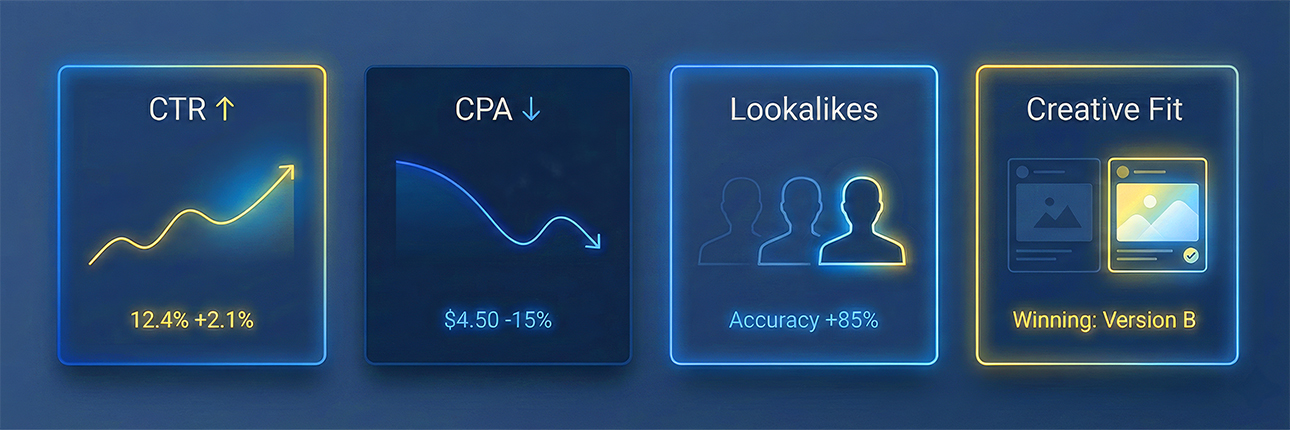
1. Higher CTRs and lower CPAs
This means ads are no longer random or unfocused.
They become:
More relevant
More personalized
Better timed
This leads to fewer wasted impressions and more efficient use of your budget.
2. Smarter lookalikes and predictive audiences
Signals help models create new audience groups based on behavior, not just demographics.
This is the key to Answer Engine Optimization (AEO): you target people not just because they fit a category, but because they act like likely buyers.
3. Better creative matching
Signals guide creative personalization:
What formats work
What messaging tone resonates
What value propositions trigger responses
This way, your ads feel more like content users actually want to see.
4. Stronger cross-channel consistency
Signals bridge data between:
Web
App
CTV
Mobile
Social
Publishers
The result is a connected customer journey, not a series of disconnected guesses.
5. Cleaner attribution
Cleaner data leads to a clearer understanding of what causes results.
You finally understand:
Which audiences contributed the most
Which placements were actually worth the spend
Which creatives pushed the last click
Which touchpoints drove real ROI
This directly improves budget allocation.
What This Means for Marketers in 2025
If the last decade was about collecting more data, 2025 is about using it better.
450M+ verified signals give marketers:
Clarity in a privacy-first world
Resilient targeting without cookies
Performance without depending on one channel
Predictive insights that guide creative, timing, and spend
More accurate understanding of real user intent
This gives you a smarter, more flexible, and more cost-effective strategy.
The Future: AI + Signal Pools = Predictive Growth
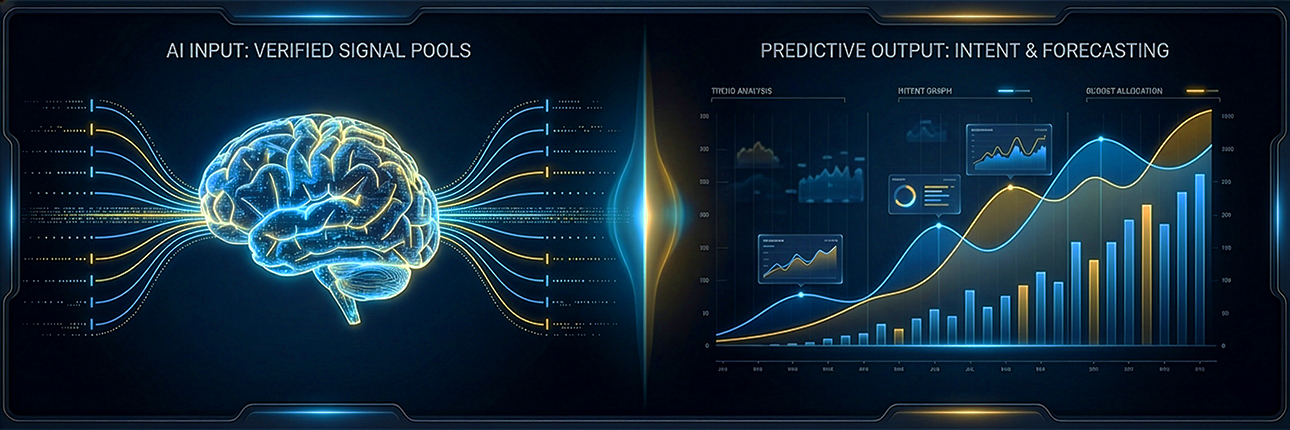
As AI models improve, signal pools will not just refine targeting. They will also predict audience behavior before it happens.
Imagine:
Knowing which users will purchase within 7 days
Predicting campaign fatigue before performance drops
Automatically shifting spend to audiences with rising intent.
Deploying creatives triggered by real-time behavior shifts
This is the direction marketing is going: moving from reactive to predictive.
Platforms with 450M+ verified signals are not just succeeding in 2025. They are laying the groundwork for the next era of digital performance. All pools don’t just improve targeting; they transform the entire campaign lifecycle. They make your media dollars smarter, your creative sharper, and your path to conversion clearer.
In a world where data quantity is everywhere, but data quality is rare, 450M+ verified signals are the new competitive advantage.
They help you reach the right person, with the right message, at the right time, over and over again.